
SPANISH LIME : THE TROPICAL FRUIT YOU SUCK, NOT BITE
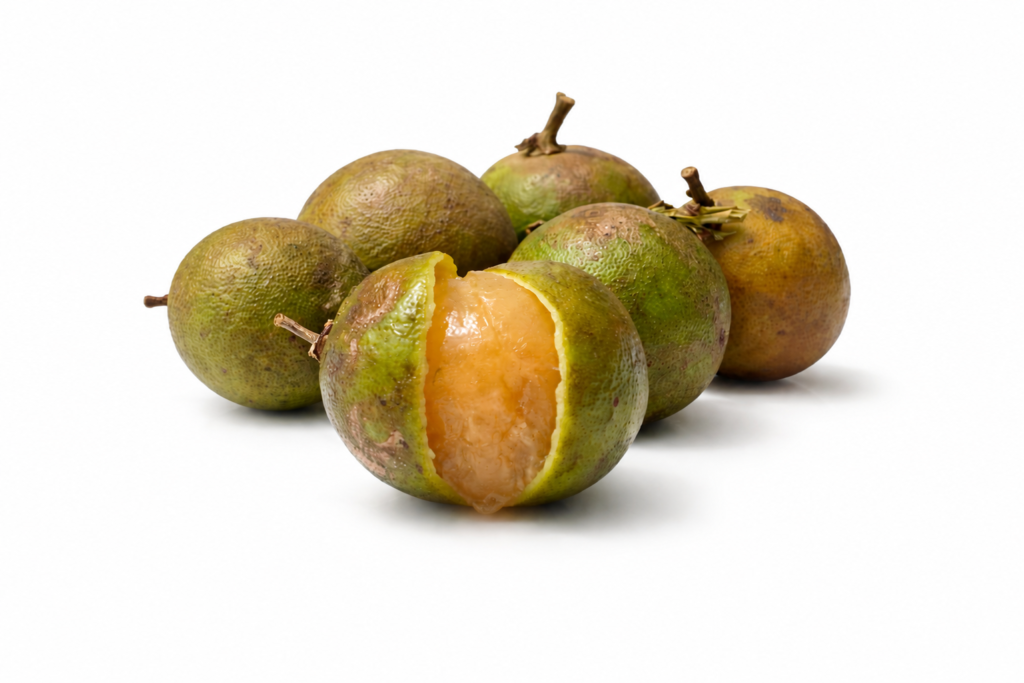
Spanish lime, also known as quenepa, mamoncillo, genip, guinep, limoncillo, guaya, or huaya, is a tropical fruit from the species Melicoccus bijugatus. It has a firm green shell and a juicy, jelly-like, sweet-tart yellow or orange pulp that clings to a large seed.
This is not a fruit you bite without thinking. Quenepa has a ritual: crack the shell, place the pulp-covered seed in your mouth, and slowly suck the sweet-tart juice until the fiber is left. It is summer, street food, Caribbean nostalgia, and tropical flavor in one tiny fruit.
Its practical value comes from freshness, natural carbohydrates, small mineral contributions, variable fiber, and plant compounds. It can also be a more real-food alternative to candy, sugary drinks, and ultra-processed snacks when eaten in moderation.
More tropical flavor. More real fruit. More freshness. More summer memories in every bite.
Approximate range per 100 g of edible portion: moderate energy and natural carbohydrates.
The edible part is the sweet-tart, jelly-like pulp that surrounds the large seed.
The taste can feel like soft lime, tropical lychee, and summer fruit with a tangy edge.
The large, smooth, slippery seed requires real caution, especially with young children.
What Is Spanish Lime or Quenepa?
Spanish lime is the fruit of Melicoccus bijugatus, a tropical tree in the Sapindaceae family. That means it is related to lychee, longan, and rambutan, not to actual limes. The fruit has a green shell, juicy pulp attached to one large seed, and a sweet-tart flavor that is extremely recognizable across the Caribbean and tropical Latin America.
🥭 A fruit with many names
Spanish lime, quenepa, mamoncillo, genip, guinep, limoncillo, guaya, huaya, and mamón can refer to the same fruit depending on the country or community.
🍋 Not a true lime
Despite the English name Spanish lime, this fruit is not a citrus fruit. It belongs to the Sapindaceae family, like lychee and rambutan.
🌴 Caribbean and tropical flavor
Quenepa is a beloved warm-weather fruit in many Caribbean and tropical regions. It is eaten fresh, used in drinks, syrups, frozen treats, preserves, and homemade recipes.
Spanish Lime Nutrition Facts
Nutrition values can vary by country, variety, ripeness, climate, and the actual amount of pulp. Classic food composition data describes Spanish lime as a moderate-energy fruit, low in fat, with natural carbohydrates, variable fiber, and small amounts of minerals such as phosphorus, iron, and calcium.
| Component | Approximate value per 100 g edible portion | What it means in real life | Useful take |
|---|---|---|---|
| Energy | ≈58-73 kcal | More energy than very watery fruits, but still fresh fruit. | Good as a natural snack in moderate portions. |
| Water | ≈68.8-82.5 g | Juicy and refreshing pulp. | Great for a tropical fresh feel. |
| Carbohydrates | ≈13.5-19.2 g | Main energy source in the pulp. | Natural sweetness, no need to add sugar. |
| Protein | ≈0.5-1.0 g | Low contribution. | Pair with yogurt, nuts, or fresh cheese if you want more fullness. |
| Fat | ≈0.08-0.2 g | Very low in fat. | Fits well as a light fresh fruit. |
| Fiber | ≈0.07-2.6 g | Highly variable depending on source and sample. | Do not market it as always high in fiber. |
| Calcium | ≈3.4-15 mg | Small amount. | Not a major calcium source. |
| Phosphorus | ≈9.8-23.9 mg | Small mineral contribution. | Adds to a varied diet. |
| Iron | ≈0.47-1.19 mg | Interesting amount for a tropical fruit. | It does not replace iron-rich foods, but it contributes. |
| Carotenes and B vitamins | Variable amounts | May provide provitamin A and B vitamins in small amounts. | Better to call it a modest contribution, not a megadose. |
Practical Benefits of Spanish Lime
Spanish lime becomes truly interesting when you understand it for what it is: a fresh, flavorful, cultural, and fun tropical fruit. Its biggest value is not promising miracles. It is helping people bring more real fruit into their routine with a totally different experience.
⚡ Natural energy
Its natural carbohydrates can provide gentle energy for mid-morning, an afternoon snack, or after a walk.
💧 Fresh and juicy feel
The pulp has a juicy texture that feels refreshing and delivers that unmistakable tropical vibe.
🍬 Candy swap potential
Because it is sweet-tart and slow to eat, it can replace candy or ultra-processed snacks when portions stay reasonable.
🌿 Plant compounds
The pulp, seed, and peel contain phenolic compounds and other phytochemicals studied for antioxidant potential.
🧡 Cultural experience
In many communities, quenepa is street food, childhood, summer, and family. That emotional connection makes the content more human and more clickable.
🏃 Active lifestyle fit
It can work as a light snack before or after a walk, as long as the portion and the seed are handled carefully.
How to Eat Spanish Lime Step by Step
Spanish lime has a very specific way of eating. You do not bite it like an apple and you do not swallow it whole. You crack the shell, suck the pulp, and discard the seed.
| Step | What to do | Practical tip | Result |
|---|---|---|---|
| 1. Wash | Wash the fruit well before opening it. | Even if you do not eat the shell, your hands touch it. | Cleaner and better experience. |
| 2. Crack the shell | Break the shell with your fingers or gentle pressure. | Avoid biting hard if you are not used to it. | The yellow-orange pulp appears. |
| 3. Suck the pulp | Place the pulp-covered seed in your mouth and suck the juice. | Do not bite or swallow the seed. | You enjoy the sweet-tart flavor. |
| 4. Discard the seed | When almost no pulp is left, remove the seed. | Watch kids closely: it can be slippery. | Safer eating experience. |
| 5. Use in recipes | The pulp can be used for drinks, frozen treats, sauces, syrups, or preserves. | Separating a lot of pulp takes time, but the flavor is unique. | Tropical recipes with identity. |
How to Use Spanish Lime Based on Your Goal
Spanish lime works best as a tropical snack, experience fruit, fresh drink, or candy alternative. It is not a sports formula or a medicine, but it is a real fruit with a lot of practical potential.
| Goal | How to use it | Main benefit | Practical tip |
|---|---|---|---|
| Sweet craving | Fresh Spanish lime in a moderate portion. | Natural sweetness and slow eating. | Better than candy if you control quantity. |
| Tropical snack | Spanish lime with cold water or fresh fruit. | Freshness and gentle energy. | Avoid added sugar. |
| After a walk | Spanish lime + plain yogurt or nuts. | Carbs + more fullness. | Do not use it as a full meal if you are truly hungry. |
| Homemade drink | Spanish lime juice or water. | Alternative to soda. | Dilute with water and sweeten lightly. |
| Kids and family | Only with supervision. | Fun and cultural fruit. | The large seed needs real attention. |
| SEO content | Explain names: quenepa, mamoncillo, guinep, genip, Spanish lime. | Captures searches from many communities. | Include the scientific name Melicoccus bijugatus. |
Simple Weekly Plan With Spanish Lime
Spanish lime can fit into a healthy routine without exaggeration. The idea is not to eat it nonstop, but to use it as a seasonal tropical fruit, a natural snack, and an alternative to candy or commercial drinks.
| Day | Moment | How to eat it | Goal |
|---|---|---|---|
| Monday | Snack | Fresh Spanish lime, 8-10 fruits depending on size and tolerance. | Swap candy for real fruit. |
| Tuesday | After a walk | Spanish lime + plain yogurt. | Add gentle energy and more fullness. |
| Wednesday | Mid-morning | Fresh Spanish lime with cold water. | Freshness without soda. |
| Thursday | Drink | Diluted Spanish lime water. | Homemade alternative to sugary drinks. |
| Friday | Family snack | Open and eat slowly, without swallowing seeds. | Safe tropical experience. |
| Saturday | Dessert | Spanish lime pulp in a homemade popsicle or frozen treat. | Controlled tropical treat. |
| Sunday | Rest | Skip it or use a small portion. | Keep fruit variety high. |
Easy Spanish Lime Recipes
Spanish lime is delicious fresh, but it can also become drinks, frozen treats, sauces, and desserts. The hard part is separating the pulp from the seed. The good part is that its sweet-tart flavor has a real tropical signature.
| Recipe | Ingredients | Steps | Time |
|---|---|---|---|
| Fresh Spanish lime | Washed Spanish limes. | Open, suck the pulp, and discard the seed. | 2-5 min |
| Spanish lime water | Spanish lime, cold water, ice, tiny touch of optional honey. | Extract pulp, mix with water, strain if desired, and serve cold. | 10 min |
| Tropical juice | Spanish lime pulp, lime, water, ice. | Mix and adjust acidity without adding too much sugar. | 10 min |
| Homemade popsicles | Spanish lime pulp, yogurt or coconut water, optional cinnamon. | Mix, pour into molds, and freeze. | 10 min + freezing |
| Sweet-tart sauce | Pulp, lime, salt, optional chili touch. | Reduce slightly or mix fresh. | 8 min |
| Light jam | Spanish lime pulp, a little panela or honey, lime. | Cook on low heat until thick. | 25 min |
🥤 Spanish lime water
Ingredients: pulp, cold water, ice, and a small amount of sweetener.
Best moment: hot day.
Why it works: refreshes while keeping tropical flavor without depending on soda.
🍨 Tropical popsicle
Ingredients: Spanish lime pulp, yogurt, or coconut water.
Best moment: homemade dessert.
Why it works: turns the fruit into a cold, more natural treat.
🍋 Sweet-tart sauce
Ingredients: Spanish lime, lime juice, salt, and a touch of chili.
Best moment: tropical meal.
Why it works: wakes up chicken, fish, tofu, or salads.
🥣 Yogurt with Spanish lime
Ingredients: plain yogurt, Spanish lime pulp, and nuts.
Best moment: snack.
Why it works: combines carbohydrates, protein, and texture.
Spanish Lime vs Lychee, Longan, Lime, and Otaheite Gooseberry
Spanish lime can look similar to other fruits, but it has its own personality.
| Fruit | Texture and flavor | How it is eaten | Practical take |
|---|---|---|---|
| Spanish lime / quenepa | Juicy, sweet-tart pulp attached to a large seed. | Open it and suck the pulp. | Experience fruit, highly cultural. |
| Lychee | White, sweet, floral pulp that separates more easily. | Peel and eat the pulp. | Sweeter and easier to separate. |
| Longan | Translucent, sweet, mild pulp. | Peel and eat the pulp. | Less acidic and more delicate. |
| Lime | Acidic citrus juice. | Squeezed or used in cooking. | Spanish lime is not a real lime. |
| Otaheite gooseberry | Very sour, small, yellow or green. | Juices, pickles, sauces. | More acidic and culinary than Spanish lime. |
Safety, Seed, and Precautions
The most important caution with Spanish lime is not chemical, but mechanical: the seed is large, smooth, and slippery. For children, it can be a choking risk if swallowed accidentally. The fruit may also irritate the throat if eaten in excess because of its astringency.
| Situation | Precaution | What to do |
|---|---|---|
| Young children | Choking risk from the large slippery seed. | Always supervise and avoid giving it to children who cannot handle the seed safely. |
| Eating too fast | May increase the risk of swallowing the seed. | Eat slowly and remove the seed once the pulp is gone. |
| Raw seeds | They are not the usual fresh-food snack. | Do not promote raw seed consumption; if used, seeds are traditionally cooked or roasted. |
| Sensitive throat | Astringency may irritate if you eat too many. | Use moderate portions and drink water. |
| Diabetes or glucose control | Contains natural carbohydrates and some recipes add sugar. | Control portions and avoid heavily sweetened drinks. |
| Digestive issues | Fiber, tannins, or quantity may bother some people. | Start small and watch your tolerance. |
Common Mistakes When Eating Spanish Lime
Spanish lime is simple, but it has rules. The biggest one: suck the pulp and respect the seed. Also, do not turn it into an overly sweet drink.
| Mistake | Why it is not ideal | Better option |
|---|---|---|
| Biting the seed | The seed is hard and is not the fresh edible part. | Suck the pulp and discard the seed. |
| Giving it unsupervised to young kids | The seed can be a choking hazard. | Supervise closely or wait until the child can handle it safely. |
| Adding too much sugar to juice | Turns a tropical drink into a sugar bomb. | Dilute with water and sweeten lightly. |
| Eating too many at once | May irritate the throat or feel heavy. | Use moderate portions. |
| Promising medical effects | Direct clinical evidence is limited. | Talk about practical benefits, nutrition, and tradition. |
Frequently Asked Questions About Spanish Lime
| Question | Practical answer |
|---|---|
| What is Spanish lime? | It is a tropical fruit from Melicoccus bijugatus, with a green shell, sweet-tart pulp, and one large seed. It is also called quenepa, mamoncillo, genip, guinep, limoncillo, guaya, or huaya. |
| How do you eat Spanish lime? | Crack the shell, suck the pulp around the seed, and discard the seed. Do not swallow it whole. |
| Are Spanish lime and quenepa the same? | In many communities, yes. Quenepa is widely used in Puerto Rico and the Caribbean, while mamoncillo, guinep, genip, limoncillo, guaya, and huaya are used in other regions. |
| Why is it called Spanish lime? | The English name comes from its sweet-tart flavor, but it is not a lime and not a citrus fruit. |
| What are the benefits of Spanish lime? | It provides natural energy, freshness, carbohydrates, small mineral contributions, variable fiber, and plant compounds. Its practical benefit is being a real-fruit snack. |
| Is Spanish lime good for athletes? | It can work as a light snack because of its natural carbohydrates, but it does not replace a full meal or a sports nutrition strategy. |
| Can you eat the seeds? | They are not eaten raw as a fresh snack. In some traditions, seeds may be cooked or roasted, but the main fresh edible part is the pulp. |
| Is Spanish lime dangerous for kids? | The pulp is not the main issue; the risk is the large, slippery seed. Children need supervision. |
| Does Spanish lime lower blood pressure or blood sugar? | It should not be marketed as a treatment. Some preclinical extract studies exist, but strong human trials with the fresh fruit are lacking. |
Tropical Quenepa Mode: ON 🧡
Spanish lime has something addictive: crack it open, see that juicy pulp clinging to the seed, and you instantly understand why so many people connect it with summer, street food, Caribbean flavor, and childhood memories.
It does not need magic promises. Its power is practical: real fruit, sweet-tart flavor, gentle energy, slow eating, and a more natural way to calm a sweet craving.
More real fruit. More tropical flavor. More freshness. More seed safety and more mindful enjoyment.
Note: this content is for informational purposes only and does not replace advice from a doctor, registered dietitian, endocrinologist, or qualified health professional.
Useful Editorial References
For editorial review, compare Kew Plants of the World Online for taxonomy and distribution, Julia Morton in Fruits of Warm Climates for composition and eating method, scientific reviews on Melicoccus bijugatus, studies on polyphenols and antioxidant capacity, and agricultural extension sources on Spanish lime or mamoncillo. This page uses a careful interpretation: real practical benefits, without promising clinical effects that have not been demonstrated from eating the fresh fruit.